
Case Study
Turning EOBs Into Actionable Data: Streamlining Healthcare Claims Reclamation
Healthcare organizations deal with large volumes of Explanation of Benefits (EOB) documents every day. Each document contains important information about a patient’s claim, insurance coverage, adjustments, denials, and financial responsibility.
When this information remains in paper documents or unstructured files, finding errors and recovering incorrectly denied claims can become slow and resource-intensive.
This case study looks at how a structured EOB digitization and reclamation process can turn scattered claim information into usable data, helping healthcare teams identify errors, correct claims, and improve billing accuracy.
01
EOB
02
Structured Data
03
Claims Reclamation
First, What Is an EOB?
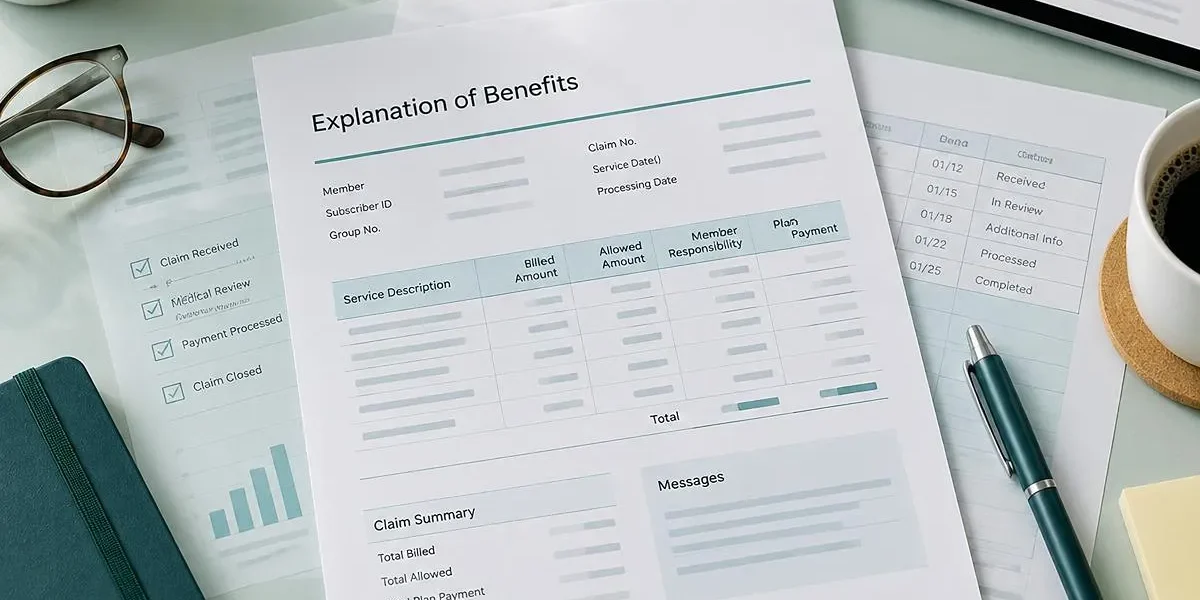
An Explanation of Benefits (EOB) is a document issued by an insurance company after a healthcare claim has been processed. It explains how the claim was handled, what the insurance plan covered, and what amount may remain the patient's responsibility.
First, What Is an EOB?
An EOB helps patients understand their claim and healthcare costs, but it is not itself a bill. If the EOB shows an amount owed, the healthcare provider may send a separate bill to the patient.
Why EOBs Matter
For healthcare providers and billing teams, EOBs contain information that can help verify claim outcomes, identify incorrect denials, and determine whether further action is needed.
The EOB Journey: From Medical Service to Patient Billing
The EOB process involves several steps before the information reaches the patient and provider.
Service Is Provided
The patient receives medical care, and the healthcare provider submits a claim to the patient's insurance company.Claim Is Processed
The insurer reviews the claim to determine coverage, allowable amounts, adjustments, and the patient's financial responsibility.EOB Is Generated
Once the claim is processed, the insurer generates an EOB containing information such as:- Patient and insurance details
- Claim information
- Billed and allowed amounts
- Insurance payments
- Patient responsibility
- Adjustments
- Denial or rejection reasons
EOB Is Delivered
The EOB is provided to the policyholder through mail, email, an online portal, or another approved delivery method.EOB Is Reviewed
The patient can review the document to understand what was billed, what the insurer paid, and what amount may be owed.Provider Billing Follows
If the EOB indicates patient responsibility, the healthcare provider may issue a separate bill for the outstanding amount.Where the Process Gets Complicated
EOBs may arrive through different channels and in different formats. When teams have to manually review and capture information from a large number of documents, even routine processing can become time-consuming.
More importantly, rejected or incorrectly denied claims can contain opportunities for recovery.
Capture claim information consistently
Identify errors in rejected claims
Determine why a claim was denied
Gather supporting documentation
Submit claims for reconsideration
Track corrected claims through processing
The EOB Digitization & Reclallmation Process
The solution brings document processing, data capture, claim review, and reclamation into a structured workflow.
EOB Collection
EOB documents are collected from available sources, including physical documents, emails, electronic files, and online systems.
The first step is to bring these documents into a process where they can be organized and reviewed consistently.
Data Collection & Standardization
Documents from different sources are prepared for digitization. Information is organized into a standardized format so that teams can work with claim data more efficiently.
Data Entry & Digitization
Relevant information is extracted and entered into the appropriate systems or databases.
This can include:
Patient Demographics
Names, contact information, and other relevant patient details are captured accurately.
Insurance Details
Insurance company information, policy numbers, and related coverage details are recorded and verified.
Claim Details
Claim IDs, billed amounts, approved amounts, rejected amounts, adjustments, and denial reasons are captured for further review.
The result is structured claim data that is easier to search, analyze, and act on than information locked inside individual EOB documents.
Rejected Claim Review
Rejected and denied claims are reviewed to determine whether the outcome appears to be related to an error, missing information, incorrect processing, or another issue that may warrant further action.
This step helps separate claims that require no further action from those that may have recovery potential.
Claim Reclamation
When an incorrect denial or processing issue is identified, the claim is prepared for reclamation with the necessary supporting information.
The objective is simple: give the insurance company the information needed to reconsider and correctly process the claim.
Correction & Processing
Once the claim is corrected or reconsidered, the outcome is tracked to ensure the appropriate processing takes place.
This creates a more organized path from EOB → data capture → claim review → reclamation → resolution.
What Makes the Digitization Process Valuable?
Digitization is not simply about converting paper documents into digital records. The real value comes from making the information easier to use.
Better Data Visibility
Structured EOB data gives billing and claims teams a clearer view of claim outcomes, adjustments, denials, and patient responsibility.
Easier Claim Review
Instead of manually searching through individual documents, teams can work with standardized claim information and focus their attention on cases that require review.
More Consistent Data Entry
A defined digitization process helps standardize how patient, insurance, and claim information is captured, reducing inconsistencies across records.
Faster Identification of Reclaim Opportunities
When rejected claims are systematically reviewed, potentially incorrect denials can be identified earlier and routed for further action.
Stronger Billing Accuracy
Accurate EOB data supports better reconciliation between claim outcomes and provider billing, helping teams identify discrepancies before they become larger issues.
From Document Processing to Revenue Recovery
The most important part of the process is what happens after the EOB is digitized.
Simply capturing information does not create much value if the data is never used.
The reclamation workflow connects data entry with action:
This approach gives healthcare organizations a more practical way to manage large volumes of EOB information while giving claims teams the visibility they need to act on potential errors.
The Outcome
A structured EOB digitization and reclamation process can help healthcare organizations move away from fragmented, manual document handling toward a more organized claims workflow.
Greater transparency into claim outcomes
Structured digital data for easier access and analysis
More consistent data capture
Systematic review of rejected claims
Better identification of potential reclaim opportunities
Improved billing and claims accuracy
A more efficient workflow for high-volume EOB processing
Ready to Make Your EOB Operations More Efficient?
Managing EOBs at scale requires more than manual data entry. With the right combination of experienced teams, structured workflows, and intelligent technology, you can turn complex claim documents into actionable data and streamline the path from digitization to reclamation.
Talk to Vsynergize about building a more efficient EOB processing and healthcare back-office workflow for your business.
Explore our healthcare and back-office outsourcing solutions to see how we can help simplify document processing, improve data accuracy, and support your claims operations.
 Reduces response times by 50%
 Date: 19th February, 2025
 Time: 12 PM – 1 PM (EST)
 Where: LinkedIn Live