
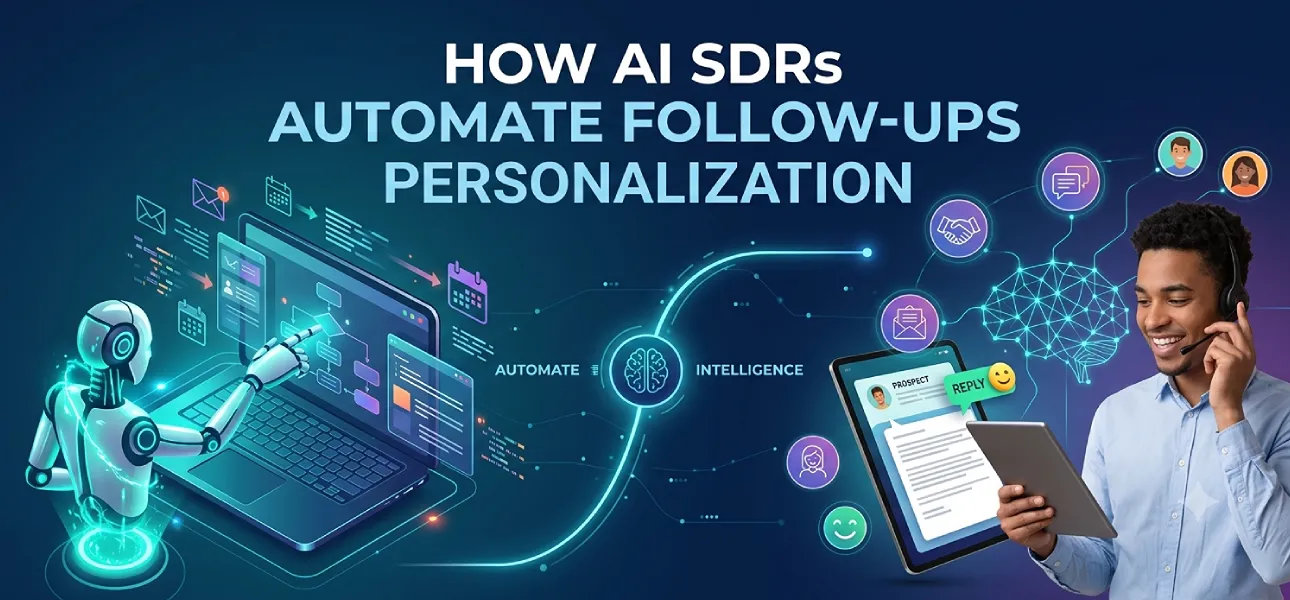
Following up with prospects sounds simple until the number of conversations starts to grow. A sales rep may need to remember who opened an email, who replied, who visited a pricing page, and who asked to reconnect next month. When those details are spread across emails, CRM records, calls, and other sales tools, follow-ups can easily become inconsistent or get missed altogether.
This is where AI SDR solutions can make a practical difference. Instead of treating every lead the same, an AI SDR can use prospect data, previous interactions, and engagement signals to decide when and how to follow up. The goal is not simply to send more messages. It is to make each interaction more timely and relevant while reducing the repetitive work involved in sales outreach.
Modern AI SDR solutions with real-time insights can also react to what a prospect does after an initial interaction. For example, someone who repeatedly views a product page may receive a different follow-up from someone who has not engaged with an email at all. This combination of automation and context allows sales teams to maintain personalized communication even as outreach volume increases.
Book an AI BPO Consultation
Looking to reduce costs, improve customer experience, and scale operations intelligently? Discover how AI-powered BPO solutions can streamline your customer support and back-office processes.
Why Traditional Follow-Ups Often Fall Short
Traditional follow-up processes depend heavily on manual work. Sales reps have to track conversations, set reminders, review CRM notes, decide when to reach out, and write messages for each prospect. This can work for a small pipeline, but it becomes difficult to manage as the number of leads increases.
The biggest problem is often inconsistency. One prospect may receive a thoughtful follow-up based on their previous conversation, while another gets a generic “just checking in” email because the rep does not have enough time to review the full history.
Timing is another challenge. A follow-up sent too soon can feel pushy, while one sent several weeks later may arrive after the prospect has already chosen another solution. Manual processes make it harder to respond to these changes quickly.
There is also the problem of repetitive work. Writing similar emails, scheduling reminders, updating CRM records, and checking engagement signals can take up a significant part of an SDR’s day. It leaves less time for conversations that actually require human judgment.
AI SDRs address this by taking over much of the repetitive follow-up process while using available prospect information to keep outreach relevant.
How AI SDRs Automate the Follow-Up Process
An AI SDR does more than send a predefined email at a fixed interval. The better AI SDR solutions combine automation with prospect data and engagement signals to determine what action makes sense next.
A typical workflow might look like this: a prospect downloads a resource, receives an initial email, opens it two days later, visits the pricing page, and then stops responding. Instead of relying on a salesperson to manually track each event, an AI SDR can recognize the sequence and trigger an appropriate follow-up based on the prospect’s activity.
Automated Follow-Up Scheduling
AI SDRs can automatically schedule follow-ups based on predefined rules, previous interactions, and prospect behavior. This removes the need for sales reps to manually create reminders for every lead.
For example, a prospect who has requested a product demo may receive a confirmation message immediately, a relevant resource a few days later, and another follow-up if they have not responded. The timing can also be adjusted based on the type of interaction.
This is particularly useful for growing sales teams that need AI SDR solutions for team workflows. Reps can spend less time managing reminders and more time handling qualified conversations.
Automation also helps prevent leads from being forgotten. Instead of relying on a busy SDR’s memory, the system can keep the follow-up process moving until a prospect responds, opts out, or reaches the end of the sequence.
Personalized Message Generation
Automation does not have to mean sending identical messages to everyone. AI SDRs can use information such as a prospect’s role, company, industry, previous conversations, stated needs, and content engagement to create a more relevant follow-up.
For example, a CFO evaluating a cost-management platform may receive a message focused on efficiency and financial impact, while an operations leader at the same company may be more interested in workflow improvements.
The AI can also refer to earlier interactions rather than starting every conversation from scratch. If a prospect previously mentioned a specific challenge, the next message can acknowledge that context and provide something relevant to it.
This is where the difference between simple automation and a capable ai sdr solution becomes clear. The objective is not to automate personalization away. It is to use available information so personalization can happen consistently across a larger number of prospects.
Multi-Step Follow-Up Sequences
Most prospects do not respond to the first message. Effective sales outreach often requires several useful touchpoints rather than repeated requests for a meeting.
AI SDRs can manage multi-step sequences across different stages of the buyer journey. A sequence might begin with an introduction, followed by a useful resource, a response to a potential objection, and eventually a meeting invitation.
The content and timing do not have to remain fixed. If the prospect replies, the automated sequence can pause or change direction. If they engage with a particular piece of content, the next message can reflect that interest.
This makes top AI SDR solutions more useful than basic email automation tools. They can manage the structure of the follow-up process while allowing individual interactions to change based on what the prospect actually does.
For example, imagine a SaaS company reaching out to 500 qualified leads. Instead of asking an SDR to manually track five or six follow-ups for every lead, an AI SDR can manage the sequence and bring the most engaged prospects to the sales team’s attention.
Real-Time Prospect Engagement Signals
One of the biggest advantages of modern AI SDRs is their ability to respond to new engagement signals.
A prospect opening an email is useful information, but other actions can provide stronger buying signals. They might visit the pricing page several times, download a case study, return to a product page, respond to an earlier message, or interact with a chatbot.
With AI SDR solutions with real-time insights, these signals can influence what happens next.
For instance, if a prospect has been inactive for two weeks but suddenly visits a pricing page, the system can identify that change in behavior and prioritize a timely follow-up. The message can reference a relevant product benefit or offer help with the evaluation process rather than sending another generic reminder.
This creates a more responsive sales process. Instead of asking, “When should we send the next email?”, teams can start asking, “What is the prospect telling us through their behavior, and what should happen next?”
That shift is important because personalization is not only about using someone’s name or company in an email. True personalization means responding to the prospect’s context, interests, and level of intent at the right moment.
How AI SDRs Personalize Follow-Ups at Scale
Automation does not have to make sales outreach feel automated. Modern AI SDR solutions can use prospect data, past conversations, and real-time engagement signals to decide what to say, when to say it, and which prospects need attention first.
Instead of sending the same follow-up to every lead, an AI SDR solution can adjust the message based on who the prospect is, what they have shown interest in, and where they are in the buying journey. This makes it possible to handle large volumes of outreach while keeping conversations relevant.
Using Prospect and Company Data
Personalization starts with having the right context. AI SDR solutions can bring together information about a prospect and their company, such as their role, industry, company size, business challenges, recent activities, and previous interactions with the sales team.
For example, a follow-up to a sales manager at a growing SaaS company might focus on improving lead response times, while the same solution could highlight operational efficiency when reaching out to a BPO leader.
The goal is not simply to insert a prospect’s first name into an email. Good personalization connects the message to something that actually matters to the buyer.
AI SDR solutions with real-time insights can also use newly available information to keep outreach relevant. If a company has expanded its team, launched a new product, or shown interest in a particular service, that context can help shape the next conversation.
Adapting Messages Based on Previous Interactions
A follow-up should reflect what has already happened. Sending a generic “just checking in” message after a prospect has already explained their requirements can make the outreach feel disconnected.
AI SDR solutions can analyze previous emails, replies, meeting notes, website interactions, and other engagement data to understand the conversation so far. The next message can then acknowledge the prospect’s earlier response rather than starting from scratch.
For instance, if a prospect previously mentioned that implementation time was a concern, the next follow-up could address that specific issue by sharing a relevant use case or explaining the onboarding process.
This creates a more natural progression from one interaction to the next. The AI SDR solution is not simply following a fixed script; it is using conversation history to determine what information is most useful at that point.
Responding to Buyer Intent and Engagement
Not every prospect should receive the same follow-up at the same time. Someone who has opened several emails, visited a pricing page, downloaded a case study, or replied with a product question may be showing stronger buying intent than someone who has not engaged at all.
This is where AI SDR solutions with real-time insights can make a significant difference. They can evaluate engagement signals and adjust follow-up activity accordingly.
A highly engaged prospect might receive a more direct message encouraging a sales conversation. A prospect who has shown limited interest may receive useful educational content instead of another sales-focused pitch. If someone asks a specific question, the follow-up can focus on answering it rather than continuing a predetermined sequence.
This approach helps sales teams prioritize meaningful conversations while reducing unnecessary outreach. It also makes AI SDR solutions for team workflows more useful because sales reps can step in when a lead reaches a point that requires human judgment or a deeper conversation.
How to Measure AI SDR Follow-Up Performance
Automating follow-ups is only useful if it improves the quality and consistency of sales conversations. Instead of measuring an AI SDR by the number of messages it sends, look at whether those messages create meaningful engagement and move prospects closer to a buying decision.
Track Reply and Engagement Rates
Start with basic engagement metrics such as email open rates, reply rates, link clicks, meeting requests, and positive responses. Compare these numbers across different follow-up sequences to understand which messaging and timing work best.
A high reply rate is useful, but the quality of those replies matters more. For example, ten relevant responses from qualified prospects can be more valuable than fifty generic replies from poorly targeted leads.
Measure Meeting Booking and Conversion Rates
The ultimate goal of an SDR follow-up is usually to create a sales opportunity, not simply generate engagement. Track how many prospects move from an initial interaction to a booked meeting, qualified opportunity, or sales conversation.
This also helps identify where the AI SDR solution is adding value. If engagement is high but meetings remain low, the issue may be the messaging, targeting, offer, or qualification criteria rather than the follow-up frequency.
Monitor Response Quality
AI SDR performance should also be evaluated by the quality of conversations it starts. Review whether prospects are responding with genuine questions, sharing their requirements, requesting pricing, or showing other signs of buying intent.
AI SDR solutions with real-time insights can make this easier by identifying changes in prospect behavior and helping sales teams prioritize conversations that deserve immediate attention.
Compare Performance Across Follow-Up Sequences
Different prospects may respond to different approaches. Compare sequences based on factors such as message timing, number of touchpoints, personalization level, channel, and call-to-action.
For example, one segment might respond best to a short three-step email sequence, while another may require a longer sequence supported by LinkedIn or other channels. This data can help teams continuously refine their AI SDR solutions for team workflows.
Measure Time Saved by Sales Teams
Efficiency is another important metric. Track how much time sales representatives save on researching prospects, writing follow-ups, updating CRM records, and deciding who to contact next.
The best AI SDR solutions should reduce repetitive work without removing salespeople from important conversations. The goal is to give sales teams more time for relationship building, discovery calls, negotiation, and closing.
Track Unsubscribe and Negative Response Rates
Personalization should never become excessive follow-up. Monitor unsubscribe rates, negative replies, spam complaints, and prospects who repeatedly ignore messages.
A sequence that generates more replies but also increases negative responses may need to be adjusted. Good automation knows when to slow down, change the approach, or stop contacting a prospect.
Final Takeaway
AI SDRs can automate much of the follow-up process, but automation alone does not create personalization. The real advantage comes from combining consistent outreach with relevant prospect data, previous interactions, engagement signals, and timely adjustments.
A well-designed AI SDR solution can determine when to follow up, what to say, and when to stop, while sales teams focus on conversations that require a human touch. Whether a business is evaluating affordable AI SDR solutions for startups or more advanced enterprise platforms, the priority should be the same: use AI to make follow-ups more relevant and timely, not simply more frequent.
The best AI SDR solutions fit naturally into existing sales processes, support team workflows, and continuously improve based on real engagement data. When implemented this way, AI becomes less about replacing the SDR and more about helping the sales team build better conversations at scale.
Contact Us
Recent Post
 October 1, 2026
-
- October 1, 2026
How AI Is Transforming Sales Development and Lead Generation
-
-





 Reduces response times by 50%
 Date: 19th February, 2025
 Time: 12 PM – 1 PM (EST)
 Where: LinkedIn Live