

- Introduction
- What Is AI BPO?
- How Much Does AI BPO Cost in 2026?
- Why AI Pricing Feels Different
- AI Call Center Pricing Models
- One Important Cost Reality
- How Much Does It Cost to Run a Call Center Internally?
- Traditional BPO vs AI BPO
- Will AI Replace Call Center Agents?
- Why Businesses Are Re-Evaluating Support Strategy
- Geographic Cost Differences, Hidden Costs & Why Companies Choose Vsynergize
- About Vsynergize
- Key Takeaways – What Businesses Should Remember
- A Practical Perspective
- Conclusion
- FAQs
Picture a normal workday. You’re finishing emails. A meeting just ended. You eventually get five quiet twinkles, and that’s when a client decides to communicate with your company. Not hereafter. Not coming this week. Right now. They want to upgrade a plan, check an order, or confirm a payment. They anticipate an answer instantly. However, they move on if they can not get it. No wrathfulness. No complaint. Just silence and, frequently, a misplaced occasion. This is exactly why customer support has changed to reduce contact center cost.
It’s no longer a department.
It’s part of the buying experience.
Companies formerly answered growing demand by hiring more agents. The moment that approach feels heavy. Office space grows. Training grows. Scheduling grows. Yet response speed still depends on vacuity.
So businesses are asking a practical question.
How important does AI call center outsourcing actually bring in 2026 – and is it worth it?
Gartner forecasts that conversational AI will manage a large share of customer service interactions across digital channels in the next few years.
Numerous associations formerly operated cold-blooded support through
Let’s break down the real pricing – by simple terms.
What Is AI BPO?
AI BPO stands for Artificial Intelligence Business Process Outsourcing. A third- party service provider manages client communication using intelligent Automation rather than counting only on mortal agents.
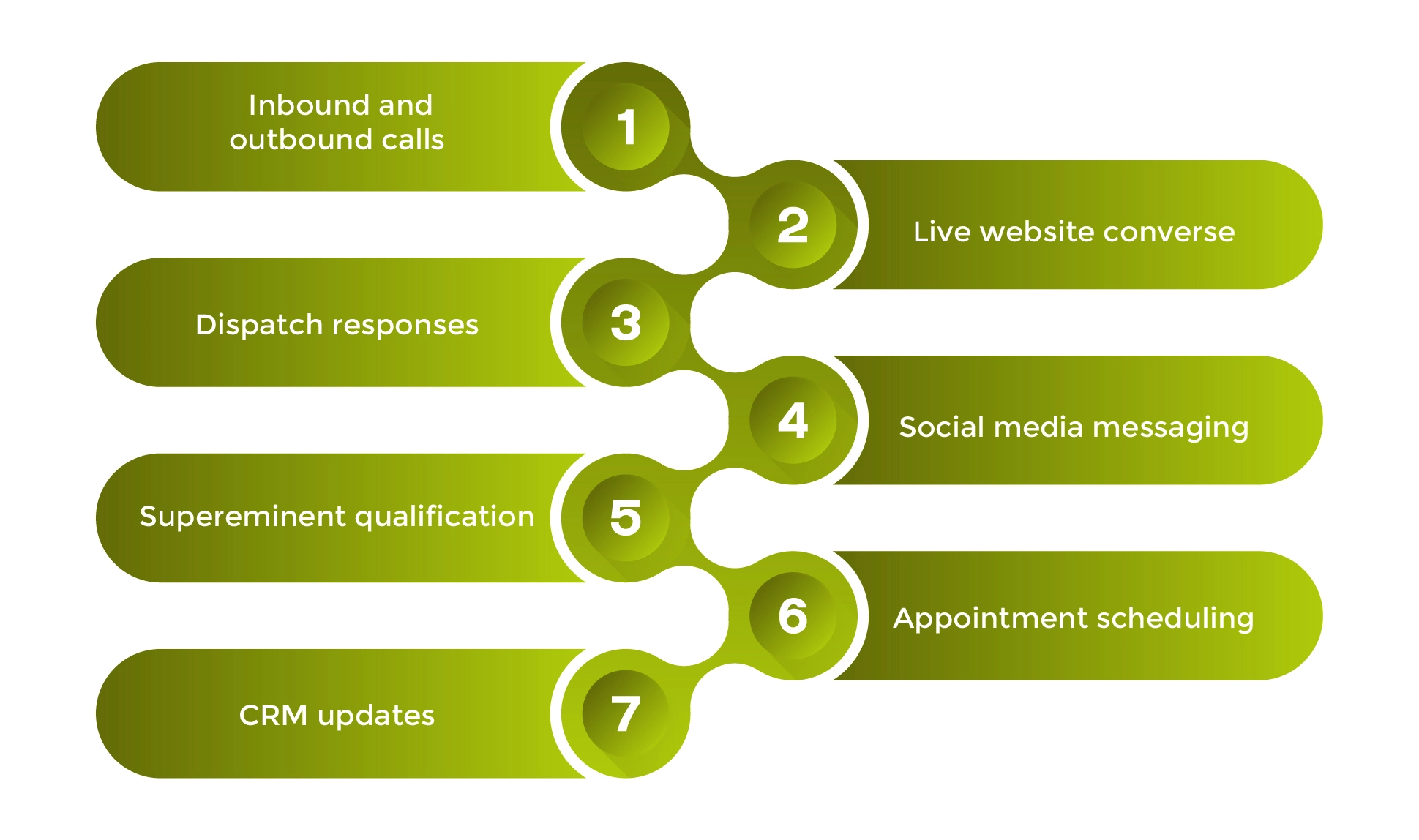
This includes:
- Inbound and outbound calls
- Live website converse
- Dispatch responses
- Social media messaging
- Supereminent qualification
- Appointment scheduling
- CRM updates
Then that’s the easiest way to understand it. Traditional outsourcing scales by adding people.
AI outsourcing scales by recycling further exchanges contemporaneously. A human agent handles one discussion at a time. An AI system can handle thousands at a time. IBM research shows that AI-powered virtual agents can resolve up to 80% of routine customer inquiries without human involvement, allowing support teams to focus on complex or revenue-impacting conversations.
There’s no staying line.
There’s no shift timing.
There’s no “ office closed ” communication.
The AI listens, understands intent, retrieves information from the knowledge base, and provides an immediate response. When a situation needs a mortal decision- timber, it automatically transfers the discussion to a trained agent with the environment formerly attached.
This is why numerous companies don’t completely replace agents. Rather, they move to a cold-blooded support structure.
AI handles:
- Repetitious questions
- Order tracking
- Word resets
- Billing inquiries
- Mortal agents handle
- Accommodations
- Escalations
- Sensitive conversations
In simple terms, AI removes routine workload so mortal moxie can be used where it truly matters.
But now comes the important part – pricing.
Businesses aren’t espousing AI support just because it’s advanced technology. They borrow it because the fiscal structure is different from traditional outsourcing.
In the coming section, we will break down exactly how AI BPO pricing works in 2026 and what companies actually pay.
How Much Does AI BPO Cost in 2026?
When directors first hear about AI support, they generally anticipate one fixed number. There isn’t one. AI call center outsourcing doesn’t follow a “ per hand ” cost like traditional BPO. You aren’t paying for hires, office space, or shift content. Rather, you pay for the operation and capability. Think of it like parallel computing. You pay for how important the service you consume is.
So let’s look at real request pricing.
Typical Market Pricing
Pricing Component | Average Market Cost |
Per chat interaction | $0.25 – $1.00 |
Voice AI per minute | $0.12 – $0.45 |
Monthly platform subscription | $1,500 – $8,000 |
| Hybrid AI + agent model | 35%–60% lower than traditional BPO |
| Initial setup (one-time) | $2,000 – $15,000 (varies by complexity) |
McKinsey reports that automation in customer care operations can reduce service costs by up to 40% while maintaining service quality.
That’s what surprises most associations. The biggest benefit isn’t immediate payroll reduction.
It’s functional capacity.
A company that preliminarily handled 8,000 support requests per month can suddenly handle 40,000 – without expanding staff. That directly impacts profit operations, not just support budgets.
Why AI Pricing Feels Different
Traditional outsourcing pricing is grounded in people:
Number of agents
- Working hours
- Training
- Waste relief
- AI pricing is grounded on exertion
- Number of exchanges
- Automation workflows
- Integrations
In simple terms, you stop paying for vacuity and start paying for resolved relations and ultimately gain the ability to reduce contact center cost. This difference is why finance brigades increasingly support AI BPO relinquishment. Yearly charges are predictable.
AI Call Center Pricing Models
Providers generally offer three pricing structures. Companies choose based on business patterns and growth stage.
1. Per- Interaction Model
You pay only when a discussion happens.
Best suited for:
- eCommerce stores
- seasonal businesses
- marketing juggernauts
- high website business platforms
Still, you pay lower, If Customers communicate with you less.
Still, the service automatically scales if business increases.
No hiring. No scheduling.
2. Yearly Subscription Model
A fixed yearly cost anyhow of volume.
Best suited for:
- SaaS companies
- Subscription businesses
- Client success brigades
This model gives budgeting clarity. CFOs like it because the support cost remains stable indeed when product operation grows.
3. Mongrel AI Mortal Support Model
This is presently the most espoused model.
AI manages routine relations.
- FAQs
- order status
- account updates
- mortal agents manage
- complaints
- retention exchanges
- special blessings
4. Why is this Model Popular?
Because Customers appreciate speed, but they also value consultation when a decision matters.
Numerous companies apply this through Vsynergize client Support/ Contact Center Services, so exchanges move seamlessly from automation to trained agents without Customers repeating information.
One Important Cost Reality
AI BPO doesn’t remove mortal involvement. It reduces human workload. A typical support center receives a large number of repetitive questions every day. These consume agent time but don’t bear judgment. Automation handles these incontinently.
As a result:
- agents concentrate on meaningful relations
- Response time improves
- functional effectiveness increases
And interestingly, companies frequently keep the same number of agents but support more Customers.
According to a Forrester customer experience study, companies that combine automation with human agents achieve higher customer satisfaction than fully manual support teams, because AI improves speed while humans provide empathy and judgment.
How Much Does It Cost to Run a Call Center Internally?
This is where numerous businesses get surprised.
Running an in-house call center includes far more than salaries:
- agent stipend
- reclamation
- training programs
- administrators and QA brigades
- telecom structure
- office space
- scheduling operation
Typical internal call center cost per agent annually in advanced requests frequently reaches $35,000 –$ 60,000 per agent when outflow is included. That means a 20- agent team can exceed $700,000 monthly operating expenditure. And capacity is still limited by working hours. This is why associations begin assessing outsourcing or automation.
Traditional BPO vs AI BPO
Feature | Traditional Call Center BPO | AI-Powered BPO |
Staffing Requirement | Large human agent teams | Minimal agents + automation |
| Availability | Shift based | 24/7 continuous |
Average call center cost per contact | $3 – $12 | $0.25 – $1.20 |
Scaling | Hire more agents | Increase processing capacity instantly |
Queue Wait Time | Common | Rare |
| Consistency | Varies by agent | Standardized responses |
Training | Continuous hiring and training | Initial training + optimization |
| Monthly Cost Predictability | Variable | Stable |
Customer Response Speed | Minutes | Seconds |
This table explains why call center outsourcing costs are now estimated differently. Businesses are no longer comparing one seller against another seller. They’re comparing labor- grounded support vs Automation- supported support.
Will AI Replace Call Center Agents?
Short answer: No. It changes their part.
AI removes repetitious work, not mortal judgment.
Routine questions make up a large part of support relations.
- delivery shadowing
- word resets
- account status
- introductory FAQs
AI handles these incontinently.
Agents also concentrate on
- retention exchanges
- accommodations
- escalations
- relationship structure
So rather than replacing agents, companies bundle them into advanced- value places.
Numerous support brigades actually report better job satisfaction because they spend less time repeating identical answers all day.
Why Businesses Are Re-Evaluating Support Strategy
When leaders calculate support budgets, they no longer ask only..
“ What does outsourcing cost? ”
They ask
“ What does a delayed response bring to the business? ”
A slow response can mean
- abandoned purchase
- misplaced lead
- churned client
AI BPO addresses this not by reducing service, but by adding vacuity.
And availability, in modern customer experience, directly connects to revenue performance.
Geographic Cost Differences, Hidden Costs & Why Companies Choose Vsynergize
For a long time, outsourcing opinions followed one simple rule: choose the position where agents bring lower.
That made sense when client service depended entirely on people sitting in services answering phones. Labor costs controlled nearly the entire budget. However, the support operation was cheaper fares were lower.
But AI- powered call centers have changed how businesses estimate call center outsourcing costs.
moment, companies no longer compare only the hourly stipend. They compare service trustworthiness, integration capability, and response speed. In numerous cases, those factors impact client experience further than position ever did.
1. How Geography Used to Influence Call Center Cost
Traditional call centers relied on large brigades working in rotating shifts to maintain 24/7 availability Because of that, the position determined cost.
A business operating a support center in the United States demanded significantly more advanced budgets than one operating in India or the Philippines. The difference wasn’t just the tipend. It included real estate, structure, serviceability, and supervision.
When associations asked how much it costs to run a call center, they were really calculating several layers of expenditure.
- agent salaries
- office space
- telecom systems
- IT equipment
- training programs
- workforce management
- ongoing hiring
Indeed, outsourced centers faced analogous functional structures. As client demand grew, further agents had to be hired. Furtherr agents meant more supervision, further training, and further functional outflow.
This is why support costs frequently increasedwhenn service quality stayed the same.
2. How AI Changes the Equation
AI call centers work differently. Rather than spanning through people, they gauge through processing capacity.
An automated system can handle multiple exchanges contemporaneously without depending on shift scheduling. Customers don’t stay for an available agent because the system responds intermittently.
Because of this, geographic position matters less for labor cost and further functional moxie. Companies now select providers based on how well they can design workflows, integrate systems, and manage escalations.
In simple terms, businesses are no longer outsourcing only labor.
They’re outsourcing capability.
3. Hidden Costs in Traditional Call Centers
numerous associations calculate support budgets by counting hires. The real charges, still, frequently come from circular conditioning that continue time after time.
Common retired functional costs include
- recruiting and onboarding new agents
- training and retraining programs
- quality monitoring
- performance operation
- scheduling and shift planning
- replacing workers who leave
Support centers regularly hire just to maintain service situations because hand development is part of the industry. Every relief requires training before the new agent becomes productive.
These repeated cycles still increase overall call center cost.
AI outsourcing changes this pattern. rather of recreating hiring, businesses invest formerly in configuring workflows and also upgrade them over time.
4. What Setup Looks Like in AI BPO
Before an AI support system goes live, it must learn how the business operates. The medication phase includes mapping processes and connecting company systems.
Typical setup conditioning include
- organizing FAQs and help attestation
- structure discussion flows
- tutoring the system client intent patterns
- connecting CRM platforms
- testing real exchanges
- enforcing security controls
After this stage, advancements come through optimization rather than retraining entire brigades. The service becomes more effective without constantly expanding the pool.
Traditional support improves by training people. AI support improves by refining processes.
5. Why Businesses Choose Vsynergize
Companies don’t borrow automation just to lower charges. They borrow it to ensure customers are always backed.
Providers like Vsynergize AI Contact Center Services offer a cold-blooded support structure that combines Automation with trained agents.
In this model, AI manages routine exchanges similar as order shadowing, account updates, and appointment documentations. When a situation requires judgment, the discussion transfers to a mortal agent along with the environment.
This approach balances speed and consolation. Customers admit immediate responses, and businesses maintain a mortal connection when demanded.
Associations working with Vsnyergize generally want
- briskly response times
- harmonious service vacuity
- CRM- integrated communication
- multilingual content
- structured escalation handling
The thing isn’t to remove mortal commerce. The thing is to make service reliable anyhow of demand.
About Vsynergize
Vsynergize provides client engagement and profit support services supported by Automation technologies.
Its immolations include
- AI- powered call center support
- outbound lead generation
- client lifecycle backing
- CRM operation
- deals enablement services
The company uses a cold-blooded operating model. Automated systems handle repetitious relations while trained agents handle complex exchanges. Businesses can thus increase service vacuity without continuously adding staffing situations.
Why This Matters
When businesses probe call center outsourcing costs, they frequently compare yearly pricing. The more important factor is functional structure.
Traditional support depends on staffing and position.
AI support depends on workflow effectiveness and system integration.
This shift explains why associations decreasingly view AI- powered outsourcing as a long- term service strategy rather than a short- term cost decision.
Key Takeaways – What Businesses Should Remember
When leaders first exploration call center outsourcing costs, they generally look for one number. The reality is more nuanced.
The real difference between traditional support and AI support is n’t only price.
It’s the operating model.
Traditional support depends on staffing situations. As exchanges increase, brigades must grow. Hiring, training, and scheduling come nonstop conditioning. Indeed a well- managed support department spends a large portion of its time maintaining operations rather of perfecting client experience.
PwC research indicates that speed and convenience now matter more to customers than price, which is why companies investing in faster support channels see higher retention and repeat purchases.
AI- powered support changes that structure.
Companies shift from paying for hand hours to paying for handled relations. rather of asking how numerous agents are demanded, they ask how numerous exchanges can be resolved.
Here is what organizations consistently observe after adopting AI BPO:
- response times come immediate
- customers admit answers at any hour
- support volume grows without commensurable hiring
- agents concentrate on meaningful conversations rather of repetitious questions
- service thickness improves
This is why exchanges around how much does it bring to run a call center now include Automation as a standard option rather than an experimental bone
Another important consummation is this:
- Reducing service detention frequently matters further than reducing service expenditure.
- Customers infrequently compare how much a company spends on support. They notice how snappily they admit help.
A Practical Perspective
Imagine two businesses offering analogous products.
One replies the coming morning.
The other replies incontinently.
Which one appears further dependable?
In most cases, copping opinions depend lower on pricing and further on responsiveness. Quick backing signals professionalism. Slow backing signals query, indeed if the product quality is identical.
This is why support operations decreasingly impact marketing and retention performance. client service has still come part of brand perception.
AI support doesn’t replace client care.
It makes client care constantly available.
Conclusion
So, what’s the real answer to the original question? How important does AI call center outsourcing cost in 2026? Lower than maintaining a completely staffed traditional support center but the bigger advantage is pungency. Traditional call center operations grow heavier as a business grows. Further customers bear further agents, further supervision, and more functional collaboration. Costs expand alongside demand. AI- powered BPO works else. Costs align with operation rather than headcount. Service vacuity no longer depends on office hours, and response speed remains stable indeed during busy ages. Associations are n’t espousing AI support simply to automate communication. They’re espousing it to insure Customers always have backing when they need it. In moments’ terrain, customers flash back responsiveness further than advertising. When help arrives snappily, trust increases. When trust increases, retention improves. AI BPO eventually allows companies to expand client experience without expanding functional complexity.
FAQs
1. How much does it bring to run a call center?
Running a call center internally includes staffing, training, supervision, structure, and scheduling operation. AI outsourcing replaces much of the staffing reliance and introduces operation- grounded pricing, making costs easier to prognosticate.
2. Will AI replace call center agents?
No. AI handles routine and repetitious relations while agents handle complex situations, escalations, and relationship- grounded exchanges. mortal involvement remains essential for decision- timber.
3. What types of businesses profit most from AI BPO?
E-commerce companies, SaaS platforms, healthcare providers, fiscal services, and subscription businesses profit significantly because they admit frequent client inquiries that bear fast responses.
4. Is AI support available all the time?
Yes. AI systems operate continuously, including weekends and leaves, icing Customers can admit backing whenever they reach out.
5. Can AI understand client intent directly?
ultramodern conversational systems dissect language patterns and environment to determine what a client needs. When the system detects a complex situation, it automatically transfers the discussion to a mortal agent.
6. Does AI client support ameliorate deals?
Yes. Quick responses help Customers make opinions quickly. numerous companies observe bettered supereminent qualification and advanced conversion when backing is incontinently available.






 Reduces response times by 50%
 Date: 19th February, 2025
 Time: 12 PM – 1 PM (EST)
 Where: LinkedIn Live